
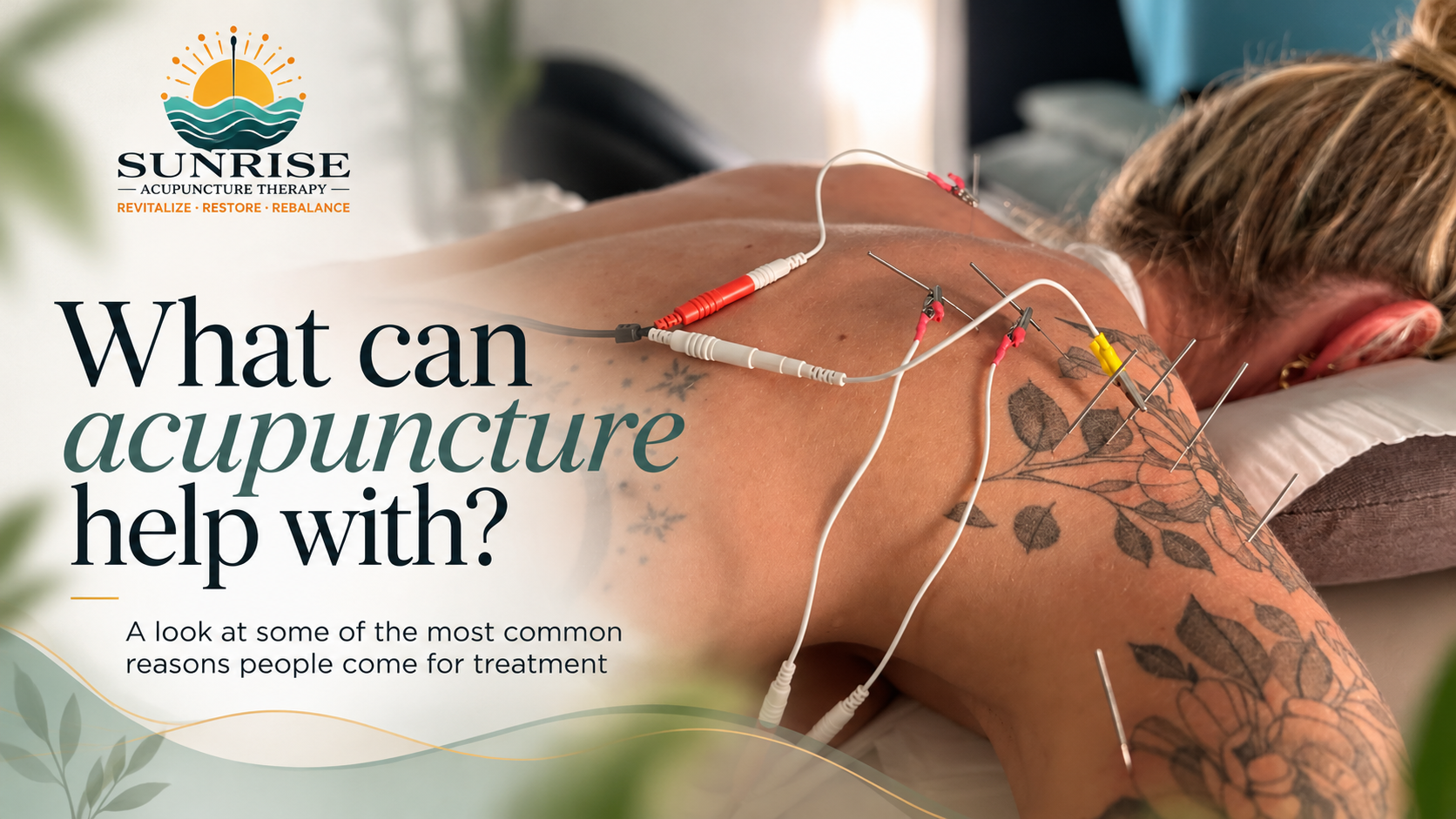
One of the questions I get asked all the time is:
“What can acupuncture actually help with?”
A lot of people still think of acupuncture mainly for back pain, sciatica or sports injuries. And to be fair, pain is one of the most common reasons people first come through my door. But once you sit down and actually talk to someone, there is often a lot more going on than the one thing they booked in for.
Someone might come in because their back is sore, but during the conversation they mention they are also sleeping badly, feeling stressed, getting headaches or just feeling completely run down. That is the part of acupuncture I find really interesting. I’m not just looking at the complaint written on the booking.
I’m looking at the person sitting in front of me.
Two people can come in with exactly the same problem and still need completely different treatments. That is why I don’t really work from a simple “you have this, so I’ll do these points” approach. I want to know what is actually going on with you.
Back Pain, Sciatica and Muscular Tension
Pain, stiffness and muscular tension are probably still the biggest reasons people initially come to see me. That could be lower back pain, sciatica, neck and shoulder tension, muscular tightness, joint discomfort or something that has built up through work, training or everyday life. Sometimes there has been an obvious injury.
Other times there hasn’t. A person might just say: “I’ve been tight there for months.”
Or: “It comes and goes, but it never really settles.” When someone comes in with pain, I want to know more than just where it hurts.
How are you moving? What makes it worse? What makes it better? How long has it been there? Is anything else going on at the same time? That is usually where you start seeing that the problem is not always as simple as one sore area.
Headaches, Migraines and Neck Tension
Headaches and migraines are a good example. Someone might book in because they are getting recurring headaches, but once we start talking they mention their neck is always tight, their shoulders are up around their ears, they are clenching their jaw or they haven’t been sleeping properly. So I’m not just looking at the headache.
I’m asking what else might be going on around it. Is there neck tension? Are they clenching? Are they under more stress than usual? How is their sleep? And that is where you start seeing how much these things can overlap.
Stress can affect sleep. Poor sleep can affect energy. Tension can build through the neck and shoulders. Then someone ends up coming in because of the headache, even though there may be a few different things feeding into it.
Stress, Tension and Finding Time to Switch Off
Stress is something I see a lot, even when the person hasn’t actually booked in because they are “stressed”. They might have booked for neck pain. Or headaches. Or poor sleep. But halfway through the conversation they say something like:
“I just can’t switch off.”
That tells you a lot. Stress can show up as tight shoulders, jaw tension, headaches, poor sleep, digestive changes, tiredness or just that constant feeling of being switched on. A lot of us are moving from one thing to the next all day.
Work. Family. Training. Appointments. Life in general. And sometimes you don’t realise how much you are carrying until the body starts showing it. For some people, acupuncture ends up being one of the only times during the week where they actually stop.
No phone. No running around. Just an hour where they can switch off for a bit. And very often when someone is struggling to switch off, sleep is part of the conversation too.
Sleep Difficulties and Rest
Poor sleep looks different for everyone. Some people can’t fall asleep. Some fall asleep straight away but wake several times.
Some sleep through the night and still wake up feeling exhausted. So when someone tells me they are not sleeping well, I don’t just ask how many hours they are getting. I want to know how they are feeling in general.
Are they stressed? Are they tired all day? Are they getting headaches? How is their digestion? Do they wake at the same time every night? Because poor sleep rarely sits there completely on its own. And if it has been going on for long enough, the next thing people usually notice is their energy.
Fatigue and Feeling Run Down
Sometimes that is genuinely what someone says when they sit down. There isn’t one huge problem. They are just tired. Flat. Run down. Not quite themselves.
And that is actually more common than people think. Poor sleep, stress, work, family life, training, not enough downtime — it all adds up. Not every treatment has to be about fixing a bad back or chasing one specific symptom.
Sometimes someone just feels like they need a bit of support because life has caught up with them. And when you start talking about how someone feels overall, digestion often comes up as well.
Digestive Discomfort and General Wellbeing
Bloating, digestive discomfort or changes in digestion can have a knock-on effect on how you feel generally. It can affect energy. It can affect sleep. It can affect how comfortable you feel during the day. Some people choose acupuncture alongside their normal healthcare when they are dealing with digestive concerns.
This is one area where I am always very clear though. If symptoms are persistent, unusual or unexplained, they should be medically assessed. Acupuncture should work alongside proper medical care, not replace it.
The same goes for women’s health and fertility support.
Women’s Health: Menstrual and Menopause Support
Women come to see me at lots of different stages of life. That might be around menstrual health, cycle-related symptoms, perimenopause, menopause or just feeling out of sorts during a period of change. And again, everyone is different.
One person might be struggling mainly with sleep. Another might be exhausted. Someone else might be getting headaches, feeling anxious or noticing changes throughout their cycle.
So I don’t look at “women’s health” as one big thing. I still want to know what is actually happening with that individual person. What has changed? What is bothering you most? What else is happening at the same time?
For some people, that conversation also involves fertility.
Acupuncture and Fertility Support
Fertility is something people ask me about quite a lot. Some people come in while trying to conceive naturally. Others come alongside fertility treatment through a clinic.
For me, the biggest thing is supporting the person through what can be a very stressful and emotional process. Fertility journeys can take a lot out of people physically and mentally. Acupuncture may form one part of that wider support.
I would never tell someone acupuncture guarantees pregnancy, because it doesn’t. And it should never replace proper fertility assessment or medical treatment. It is another form of support that some people choose to include along the way.
Men’s Health
Men come in with plenty of the same things too. Stress. Poor sleep. Tiredness. Muscular tension. Not feeling at their best. Sometimes there is one very clear problem.
Sometimes there are four or five smaller things all happening at once. And it comes back to the same questions. What is going on? How long has it been happening? What changed? What else is happening with it?
That is what helps me decide how I want to approach the treatment. A lot of the men and women I see are also active people, which brings us onto another big area.
Sports-Related Tension, Training and Recovery
I see plenty of people who train regularly. Gym. Running. Field sports. Physical jobs. Sometimes there is an actual injury.
But sometimes there isn’t. You can just feel tight. Restricted. Heavy. Fatigued. Or there is one area that keeps annoying you every time you train.
Acupuncture can be used as part of a bigger recovery approach alongside sensible training, rehabilitation and movement. And one thing people sometimes forget is that you don’t actually have to wait until something is really bad before doing anything about it.
Maintenance and Everyday Wellbeing
Not everyone who comes to me is in pain or dealing with a major problem. Some people come every so often because they like having that bit of time to look after themselves. It might be to manage tension. Help them switch off. Support recovery. Or just keep on top of smaller things before they become bigger problems.
And I think that is important too. You don’t always have to wait until you are struggling.
So What Can Acupuncture Actually Help With?
For me, the simplest answer is that I don’t just look at a label. I don’t just see: Back pain.
Migraine. Poor sleep. Stress.
I see the person who is dealing with it. Because a lot of the time these things are connected. The person with headaches may also have neck tension.
The person with neck tension may be stressed. The person who is stressed may not be sleeping. And the person who isn’t sleeping may be completely exhausted.
That is why your first appointment includes time for us to actually talk. What has been happening? How long has it been going on? How is your general health? What would you actually like help with? Then I build the treatment around that.
You don’t need to understand acupuncture before you come in. You don’t need to know which points you need. And you definitely don’t need to arrive with everything figured out.
Just tell me what has been going on.
That part is my job.
Considering Acupuncture in Shannon, Co. Clare?
If you have been thinking about acupuncture but you’re not sure whether it might be suitable for what you’re dealing with, you are always welcome to ask me first. I’m based at Sunrise Acupuncture Therapy in Shannon, Co. Clare. If you have a question or you’re ready to arrange an appointment, you can contact me directly through WhatsApp.
Book on WhatsAppAcupuncture is a complementary therapy. Suitability and results vary, and it does not replace medical assessment or prescribed care.